

The formation of a transportation network is determined by a range of factors, including geopolitical, social, economic, physical-geographical, ecological, technological, and others. When considering transport as an element of geopolitics, it is possible to trace the evolution of how different components of transportation networks influence the development of a particular country, region, or the world as a whole. From one perspective, transportation routes are a significant element of the geopolitical ambitions of various actors, and from another perspective transport shapes the geopolitical landscape of the world. Numerous studies have addressed the significance of transport and transportation networks for the state, as well as the role that a particular mode of transport can and should play at different stages of a country’s formation and development.
Railways, in particular, play a key role in global transport infrastructure. The construction and development of railway networks often become part of the strategic plans of states seeking to strengthen their positions on the international stage. In conditions of complex political relations, railways can serve as an important factor in negotiations. Furthermore, railways can also become a crucial component of economic diplomacy, when countries use them to promote cross-border trade.
This study examines several issues related to the development of transport routes, particularly railways, in Iran:
♦ The influence of geopolitical factors on the development of transport routes in Iran, and conversely, the impact of transport route development on the geopolitical landscape.
♦ The role of economic, social, geographical, and technological factors in shaping transport routes in Iran.
♦ Lessons from Iranian history regarding the formation and development of transport routes.
♦ The benefits, efficiency, challenges and opportunities of transport routes in the contemporary era and future projects.
The Shaping of Iran’s Rail and Bus Transport Systems and Routes: From Geopolitical Challenges to Strategic Achievements
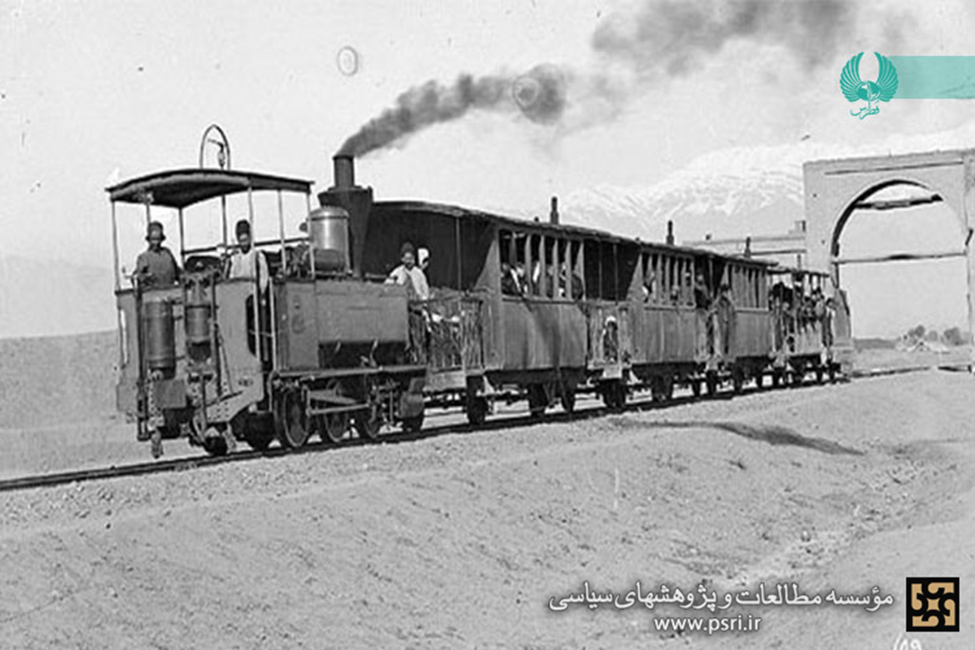
The very first efforts to construct a railway in Iran were made in the second half of the nineteenth century. The first railroad built and operated in Persia was a railway from the capital Tehran southwards to the Shrine of Šāh ʿAbd-al-ʿAẓim, a popular site of pilgrimage in Ray, with a distance of about 6 miles. The concession was given by Naṣer-al-Din Shah to a French engineer Fabius Boital in December 1886. Probably due to a shortage of money, Boital sold both concessions to a Belgian company. The Tehran-Šāh ʿAbd-al-ʿAẓim line was a single line the main line of which was completed in 1888 and the branch lines in 1893. The locals called the train māšin dudi (“smoke vehicle”, i.e., steam engine). The line continued to operate until 1962.[1] After almost 70 years of operation, the line was closed due to the development of bus transportation.
During the reign of Naser al-Din Shah the issues of railway construction were closely linked to the strategic location of Persia within the Great Game. There were various difficulties in the construction of the railway in Iran, such as a lack of financial resources or technical matters related to road construction, but most importantly, there were obstacles that arose from the competition of Britain and Russia in Iran. From Russia’s perspective, its superior position throughout Iran’s northern provinces stemmed from the lack of proper connections between those areas and the south of the country. Therefore, the construction of a north–south railway, by smoothing the path for the expansion of Britain’s influence from the southern provinces to the northern regions and diminishing Russia’s advantage, would put at risk Russia’s political, economic, and strategic interests in Iran. Conversely, from Britain’s point of view, such a railway would grant Russia access to Iran’s southern provinces and open waters, while also facilitating its military advance toward India. It is worth noting that, in order to ensure that no railway would be constructed—and thus to prevent its rivalry and relations with Britain from becoming more complicated—Russia first obtained a written commitment from Naser al-Din Shah in November 1890, and later extended it for another ten years in 1899 during the reign of Mozaffar al-Din Shah.[2] Ahmad Shah believed that a railway beneficial to Iran was one running from east to west—from Duzdab (present-day Zahedan) through Isfahan and Tehran to Arak and Kermanshah—following the ancient trade route from India to the Mediterranean dating back to Darius. He insisted that the British-favored route from Iraq to the Caspian Sea served only military purposes and that he could not spend national funds or foreign loans on a railway that offered Iran no commercial advantage.
In the meantime, however, Persia had witnessed the Constitutional Revolution on the one hand, and the Anglo-Russian Convention of 1907, on the other. It was under those auspices that railway building had made it back onto the agenda by 1910. An inter-departmental committee that had been established by the Persian government to assess Persia’s railway needs concluded that a consortium, which was ideally to be multi-national in its complexion, should be entrusted with building an integrated trans-Persian railway to run from the Persian Gulf to the Caspian Sea with several lines branching out eastward and westward. Such an integrated, nation-wide, and multi-power supported approach was considered preferable to the building of isolated railway lines by either purely Russian or purely British conglomerates in their respective zones of influence. Indeed, from the Persian point of view an integrated multi-national approach was obviously the most sensible one. The logic of the Anglo-Russian Convention was, however, more powerful. This led to the situation that pre-war Persia witnessed two purely Russian and one purely British project being pursued totally independently from one another.
The first, and more ambitious, of the two Russian projects proposed building a Trans-Persian railway from Tehran via Kerman to Bandar-e ‘Abbas. It was, as mentioned above, in actual fact, merely to be Russian-led while also involving money and expertise coming from other European powers. It was, at last, submitted formally in December 1914, but nothing would come of it because of the World War I. More success was had by the other, smaller-scale, Russian project, which was for a railway line from Jolfa on the Russo-Persian border to Tabriz with a possible branch line down to Orumiyeh. Despite the outbreak of the war the Russians were able to complete this line (but not the branch to Orumiyeh), which opened on 21 February 1916. The 146-kilometer line was the first broad-gauge railway (1524mm). There was also a 53-kilometre long side track from Sufiyan to Sharafkhaneh.[3]
The British project, on the other hand, proposed the construction of a railway line from Mohammereh (today’s Khorramshahr) and/or Khor Musa on the Persian Gulf through what is now called Khuzestan up northward to Khorramabad. On 4 March 1913, an option for this project was given to a firm called the Persian Railways Syndicate (PRS), a consortium that was dominated by the Imperial Bank of Persia and the Anglo-Persian Oil Company (APOC) although neither of these two held a majority of the shares. As the World War I progressed, turning some areas of officially neutral Persia into a battleground with devastating consequences for the population there were no further major developments in the area of railways.[4]
Denis Wright in The English Among the Persians writes:
“By the end of the Qajar period, no long-distance railway had been built in Iran; therefore, there had been no negligence on the part of Britain. Among the many aspects of the broad and comprehensive concession that Julius de Reuter had obtained from the Shah in 1872, the project he cared for most was the railway he hoped to construct between the Caspian Sea and the Persian Gulf. The British government had become increasingly worried about the danger that Russia posed to Iran. It strongly believed that if no railway existed between the Persian Gulf and the interior of Iran, British military assistance to Iran would be impossible in the event of a Russian attack from the north.” [5]
Prior to the opening of the Trans-Iranian Railway Iran remained a country without a proper railway network, with approximately 300 kilometres of isolated railroads of different gauge widths of which Julfa-Tabriz, Sufyan-Sharafkhaneh and Mirjaveh-Zahedan lines have survived to our times.
Reza Shah, who was the founder of Pahlavi dynasty in 1925, wanted to modernize the country and perceived railways as one of the most important elements of his modernization policy. Political and military considerations occupied Reza Shah’s mind more than anything else. These included avoiding the construction of any north–south or east–west railway, keeping away from the borders of India, Iraq, and Turkey, and staying as far as possible from the Soviet railway lines in Soviet Azerbaijan and the Central Asian republics, as well as from the British railway network in Iraq and India. It was also decided that the line should not pass through any major city except the capital, and that it should run mainly through nomadic regions, over which establishing central government control was of great importance.[6] He decided to lay a railway track between the Caspian Sea coast and the Persian Gulf. Different plans were discussed although the most frequently suggested routes for the “Transpersian railway” were: Astara–Isfahan–Shiraz–Bandar-e Abbas, Astara–Teheran–Kerman–Chahbahar, Astara (Russian border)–Rasht–Teheran–Yazd–Nushki (British India), Bandar-e Anzali–Teheran–Isfahan–Bandar-e Bushehr, Bandar-e Anzali–Teheran–Kerman–Bandar-e Abbas, and Julfa (Russian border)–Tabriz–Teheran–Kerman–Bandar-e Abbas.[7]
At the beginning of 1926 discussions took place in the Majlis, the Iranian parliament. There was a dispute about building a national railway. Some opposed it, arguing that it would not bring direct financial profit and that resources should instead go to sugar production. Some countered that the railway’s indirect benefits to the country were significant, similar to essential institutions like the police or army, and that undertaking sugar production could still be addressed alongside the railway.[8] However, the Parliament approved the project of the Trans-Iranian Railway (Rahahan-e sarasari, “the main railway”). The line was supposed to begin in the harbour city of Bandar-e Shah (today Bandar-e Torkaman), pass through the Alburs Mountains, Teheran, Qom, Zagros Mountains, Ahvaz and reach the Persian Gulf in the small coastal village of Khor Musa, whose name was later changed to Bandar-e Shahpur (today Bandar-e Emam Khomeini). This route was completely different from the projects suggested by Russia or Great Britain and the reason for that was strictly political. Both Bandar-e Shah and Bandar-e Shahpur were located as far as possible from Iran’s two strong neighbours – Russia and British India.[9]
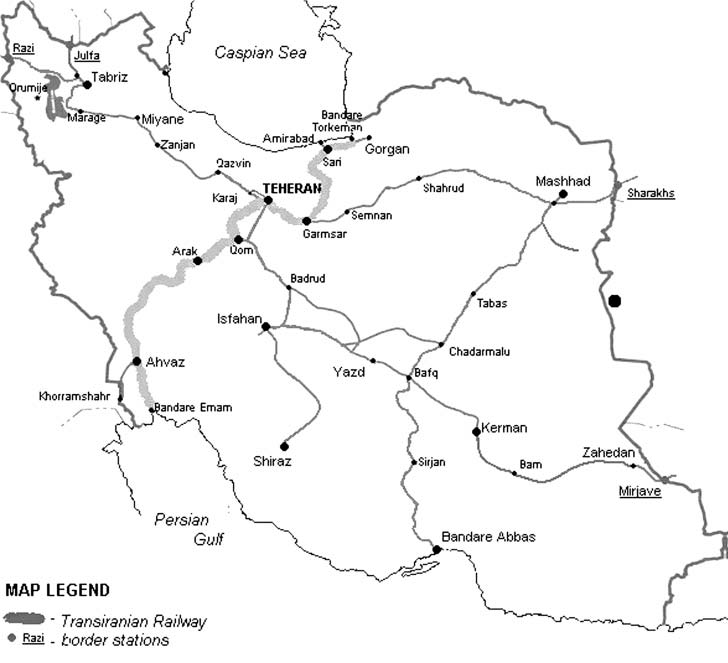
Reza Shah did not want to borrow money for the construction of the line and therefore the government introduced new taxes on sugar and tea. Every three kilograms of those goods that was produced or imported to the country were charged two rials of tax. Since those products were often consumed by Iranians, it generated huge revenues and gave the state a monopoly on the trade of those products.[10] After two years (in 1927) the government had collected sufficient money and construction works commenced from both ends of the line. In the south the works were conducted by the American company Ulen & Co., while the northern part of the line was constructed by three German companies: Philip Holtzman, Julius Berger and Siemens Bahn. The American and German companies that were working on the project were replaced by KAMPSAX, a Swedish–Danish consortium that remained the contractor of the project until its completion in 1938.
Construction of the line was a challenge for engineers, since it passed through two mountain chains – Zagros and Alburs – very often at a level over 2000 meters (the line’s highest point is located at 2214 meters above sea level). It was necessary to construct 4772 bridges and 224 tunnels, of which 17 were more than 2 kilometers long. More than 3000 tons of gunpowder, 2800 tons of dynamite and 180,000 tons of concrete were used for the construction of these tunnels.[11] Altogether 95 stations were built along the line, with the biggest station located in Tehran. The stations of the Trans-Iranian Railway were built in two architectural styles: “Middle Eastern” (southern part of the line) and “modern” (northern part).[12] In the very remote areas those stations were sometimes the only mainstay of the civilization, being fortified by the army, since in many places local tribes (e.g. Bakhtiaris) attacked the stations and trains. This problem was limited by Reza Shah, but even the Allies, who occupied Iran during the Second World War, needed to fortify many stations, tunnels and bridges to secure their transports. To operate the traffic on the line, the government ordered 53 steam engines, 834 wagons as well as two diesel motor-cars produced by Swedish NOHAB.[13] According to Brian Hollingsworth, the Beyer-Garratt engines used on the Trans-Iranian were among the most powerful engines in use at that time in the whole of Asia.[14]
The construction works were finished on 18 August 1938 and the official opening ceremony took place a week later. The total costs of the Trans-Iranian Railway reached two billion rials ($125 million), which at that time constituted 20 per cent of the country’s annual GNP.[15] Most of the costs (65 per cent) were covered by the revenues from the taxes on sugar and tea and 35 per cent of the costs were covered by the government and the National Bank of Iran.[16] As planned by the shah, the state financed the line without any loans from foreign institutions or governments. In this context, it is worth mentioning that the Transiranian Railway was a standard-gauge line (i.e., 1435 mm), while in most other developing countries narrow-gauge lines were preferred, since construction of standard-gauge lines was more expensive.
It can even be stated that the line was maintained only because of its prestige, since it did not make any profits. Its construction and usage were very expensive and during the first years of operation the traffic was rather limited, with only 200 tons of goods transported daily along the line.[17] Nor was passenger traffic sufficient to cover the costs of the train’s operation. Another problem was caused by the fact that the rolling stock as well as tracks imported to Iran were not designed for the Iranian climate (high temperatures in the south of Iran) and its geographical features. Although more than 60,000 people worked on the construction of the line, most specialists and engineers came from Europe and America.[18]
The actual north–south railway route for Iran, which had even been proposed during the Qajar era and later approved by Iran’s early parliaments, remained unresolved due to the lack of allocated funds. This railway was supposed to run from Bandar Abbas to Shiraz and Isfahan, then pass through Tehran and continue to Iran’s most important commercial port of that period, Bandar Anzali.[19]
Nevertheless, it must also be pointed out that the Trans-Iranian Railway influenced the development of particular cities located along the line, like Andimeshk, Arak, Sari or Ahvaz. The construction works involved construction of hospitals, health centers, expansion of the telephone network, development of a water supply system (for steam engines) as well as new paved roads that were needed to reach the building sites.[20] The Transiranian Railway also strengthened the government’s control over the remote areas in the western part of the country. The railway allowed fast transportation of troops to this rebellious area. The line served not only as a fast way to transport goods and passengers, but also as a symbol of modernization, as well as the country’s sovereignty and power. The high costs of the construction, the engineering challenges, the modern engines and shorter travel times definitively appealed to the “pride and dignity” of Iranians. Therefore the Trans-Iranian Railway became a symbol of the shah’s modernization policy, a subject of national propaganda and a proof of self-sufficiency (no loans). The line also became the reason for the shah’s abdication, since it was considered one of the most important and safest routes for transporting military support for the Soviet Union. At the same time the Allies suspected Reza Shah of collaboration with the Nazis, which could result in the blockade of the line. Those allegations were strengthened by the fact that many Germans had important positions in the Iranian government service, including Iranian State Railways.[21] Therefore, on 25 August 1941, the Allied forces invaded Iran and began its occupation – Soviets in the north, and the British forces (together with Australian and Indian soldiers) in the south. The shah abdicated and was succeeded by his son Mohammad Reza Pahlavi.
The Trans-Iranian Railway became the backbone for the development of the Iranian railway network – until the mid-1990s most of the new lines constructed in Iran were directly connected with this railway. However, the line never became the main Iranian transport route. The importance of the line decreased even more in the 1990s when construction of the railway to Bandar-e Abbas (harbor city in south-eastern Iran) was completed.
Julian Bharier described it as “one of the classic examples of conspicuous investment in a developing country”.[22] Its construction may definitely raise questions around its cost, effectiveness, economic aspects as well as appropriateness for Iran’s needs and stage of development in the 1930s. Nevertheless, it must also be stressed that the railway accelerated the development of many cities located along the line as well as strengthening the power and position of the central government in some remote areas.
The arrival of the first passenger-carrying bus in Iran dates back to the late Qajar period. The bus was imported into Iran by a Belgian merchant, and its first destination in Iran was the city of Rasht. At that time, Iran’s roads were in very poor condition and for this reason the Belgian merchant who brought the first bus to Rasht encountered difficulties and eventually had to sell the bus to an Iranian named Mo'in al-Tojjar in Tehran. Mo'in al-Tojjar used it to transport people within the city of Tehran. Over time, people’s need for this means of transportation increased, and other merchants also joined this trade by importing buses.[23]
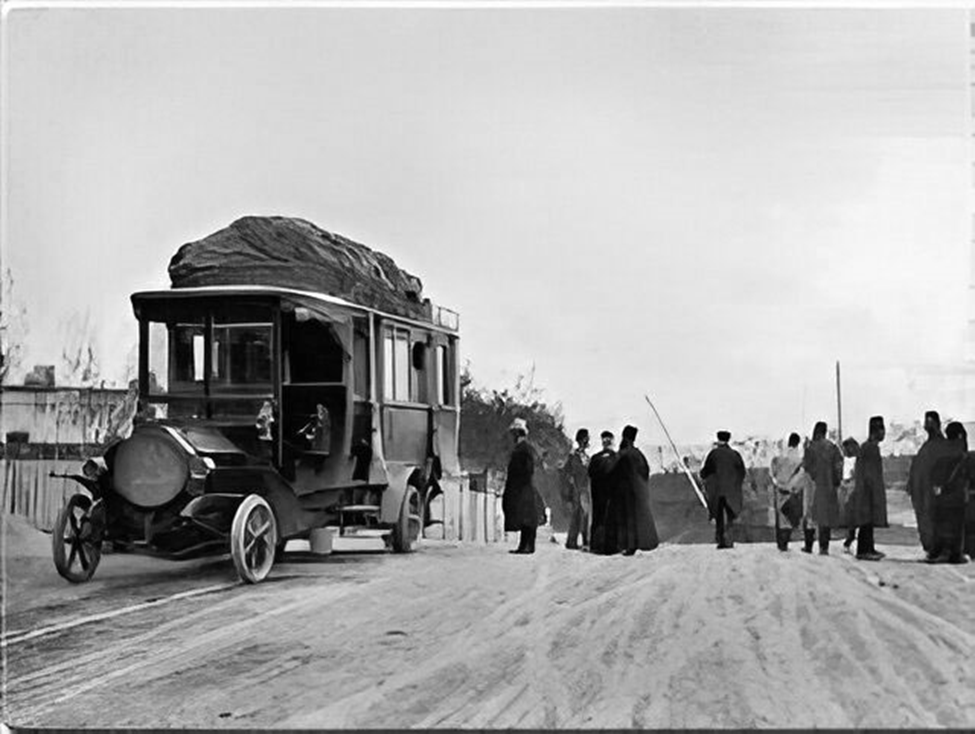
In 1938 the first imported buses arrived in Tehran. These buses, most of which were double-decker, were used to transport passengers across the capital. At that time, public transportation mainly consisted of trams, horse-drawn carriages, and taxis. During this period, the buses operated on the city’s main routes, such as Shah Reza Street (now Enghelab Street), and sometimes their number reached 15 or 20 vehicles. This period marked the beginning of a transformation that became more noticeable in the following years. In the years after World War II, with the growing population of Tehran and increasing problems in public transportation, the need for further development of bus services became increasingly apparent. During the 1950s and 1960s, bus routes expanded in Tehran and other major cities, and at the same time, the government established new companies to manage and operate these bus lines. In the 1960s, with technological advancements and the importation of new buses from various countries—especially European ones—bus services reached a higher level of quality. Among these improvements was the introduction of enclosed buses, replacing the previous open-door buses that had been used earlier. After the victory of the Islamic Revolution in 1979, Iran’s bus transportation system faced numerous challenges. At first, budget shortages and economic problems caused by political changes had a significant impact on the quality of services. However, by the early 1980s, the government sought to improve public transportation by purchasing new buses and renewing the fleet. During this period, many buses were imported from European and Asian countries. In the late 1990s and early 2000s, with the development of new infrastructure and increased demand, bus routes expanded further in Tehran and other major cities. This period was especially marked by the introduction of Compressed Natural Gas (CNG)-powered buses and improvements in Intelligent Transportation Systems (ITS).[24]
The construction of railways in Iran remained for many years at the center of geopolitical rivalries, which effectively blocked their development. Under the existing geopolitical circumstances, it was impossible to avoid political pressure from Great Britain and Russia; however, it was still possible to derive certain benefits by aligning and adapting national interests in order to achieve at least minimal progress. In this regard, it is necessary to distinguish between the approaches of these two powers. While Great Britain was not opposed to the construction of railways for its own military purposes, Russia bound Iran by a treaty/moratorium prohibiting railway. Thus, whereas Russia’s policy aimed at the complete isolation of Iran and the region, British policy—while seeking to expand its influence in Iran—also held the potential to foster development, with the prospect of eventually transforming the function of railways from primarily military to economic.
Without the Qajar dynasty’s twenty-year pledge to Russia not to construct railways, it might have been possible to take advantage of the rivalry between the two powers and, by balancing their influences, to build separate railway lines within each sphere of influence—Great Britain in the south and Russia in the north. Efforts in this direction were indeed made by Iran, as evidenced by the existence of approximately 300 kilometers of disconnected railway lines constructed prior to the rise of the Pahlavi dynasty. However, these efforts were insufficient to produce tangible development, even at the domestic level. Moreover, this commitment to Russia did not protect the country from the threat of geopolitical tensions or weaken the position of either power in Iran; rather, it hindered the country’s development for many years. Thus, the foundation of transportation network development was primarily political and geopolitical in nature, while economic and social considerations were secondary or largely overlooked. Consequently, transportation policy was shaped according to geopolitical imperatives without adequate consideration or evaluation of economic and social needs—an outcome that, given the historical and political conditions of the Qajar period, was difficult to avoid in practice.
If, during the Qajar period, geopolitical imperatives were taken into account in decisions concerning railway construction, during the reign of Reza Shah priority was given both to avoiding geopolitical influences and to modernization, national interests, political control, and the centralization of power. What does avoiding geopolitical influences mean in this context? It means that, from the outset, the construction of the Trans-Iranian Railway did not take into consideration the prospect of establishing transportation links with neighboring or other countries. In other words, the infrastructure was built not to promote connections, but to prevent them-a choice that led to inefficiencies and long-term consequences in subsequent years. At the time, Western newspapers wrote that the Shah of Iran had built a railway that “goes from nowhere to nowhere”—from an obscure port on the Persian Gulf to an unused port on the eastern shore of the Caspian Sea. This assessment, however, does not apply to domestic connectivity. The Trans-Iranian Railway passed through tribal regions and, in addition to strengthening political control, contributed to increased interaction among Iranians, thereby acquiring significant social importance. Moreover, in constructing this railway, commercial and economic needs were largely disregarded, as were considerations such as accessibility to trade centers or thriving cities. Thus, despite the shortcomings of the Transiranian Railway, its construction in itself implied progress and development, Iran positioned itself as an independent country and for the Iranian people it became a symbol of national dignity, statehood and consolidation. The original 1938 Bandar Shahpur to Bandar Shah route was designated as a UNESCO World Heritage Site in July 2021.[25]
Iran’s bus transportation system evolved from a modest, privately initiated effort into a comprehensive, government-supported public service. Throughout this process, private entrepreneurship played a crucial foundational role, particularly in the early introduction and expansion of bus services. At the same time, Iran’s relations with Western countries facilitated access to modern vehicles and technologies, which significantly contributed to improvements in service quality, efficiency, and modernization over time. Overall, the findings indicate that effective communication and engagement with other countries and incentivizing the private sector play a pivotal role in development and innovation. Modernization in infrastructure is often the result of both internal capacity and external interaction․
Insights on Iran’s Transport Network and Corridors: Assessing Key Drivers and Development Perspectives
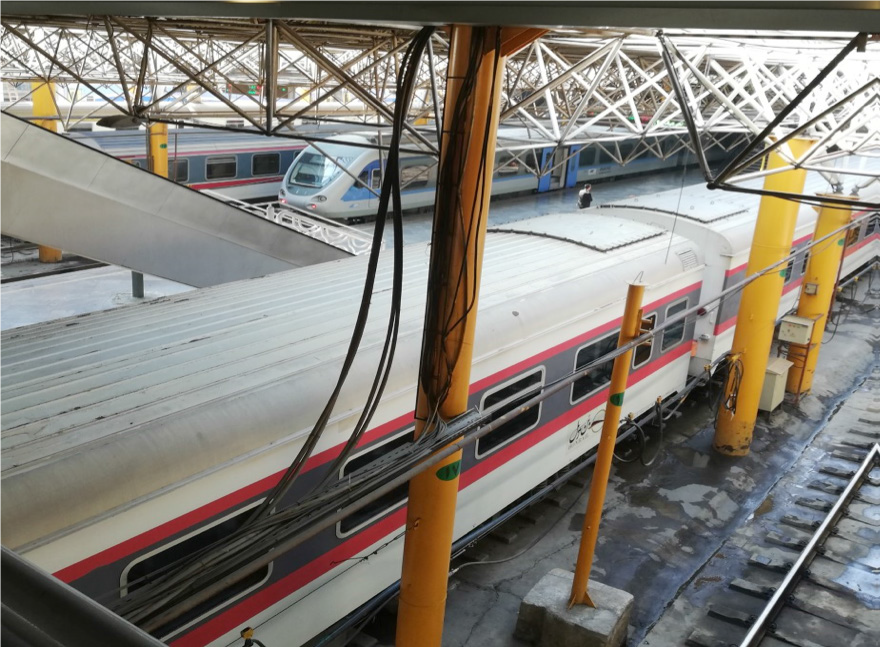
The railway system in Iran is state owned, controlled by the Ministry of Roads and Urban Development. The center of the railway network is Tehran, which is the capital of Iran and is connected to 19 local regions. The railways in Iran use standard gauge, electrified at 25 kV 50 Hz AC, which is the same as Turkey and Iraq. The majority of the railway lines are constructed with UIC60 rails on B70 concrete sleepers. Most of the Iranian railway network is a single track, which is approximately 82%, and 18% is double track. A large part of the railway network passes through desert. In these areas, windblown sand on the track reduces the elasticity of the track bed. This leads to degradation of the railway track and rolling stock and increases their vulnerability. It affects reliability, safety and passenger comfort. Maintenance of these lines takes significant effort and exerts severe financial strain on Islamic Republic of Iran Railways.
The Iranian National Railways network includes 360 stations and 12,998 km of line. It is an approximately 7.89 km railway line per 1,000 km2 of land. On January 1, 2020, the Iranian Transportation Minister announced that in the next two years the railway network in Iran will be expanded by another 1,500 km and will reach 25,000 km by 2025. In 2019 there were a total of 45 projects to build new lines and 140 projects to upgrade existing lines.[26] Although progress was made toward network expansion, the network fell short of the 25,000 km target.
The Iranian railways are working on a demand-based principle. For freight trains, there is no fixed timetable. Railway responds to demand and runs trains when there is enough freight to transport. This causes long delays in the delivery of freight to their destinations. Iranian railway network has 170 terminals with 200 origins to destination demands, which handle around 1,500 wagons every day.[27]
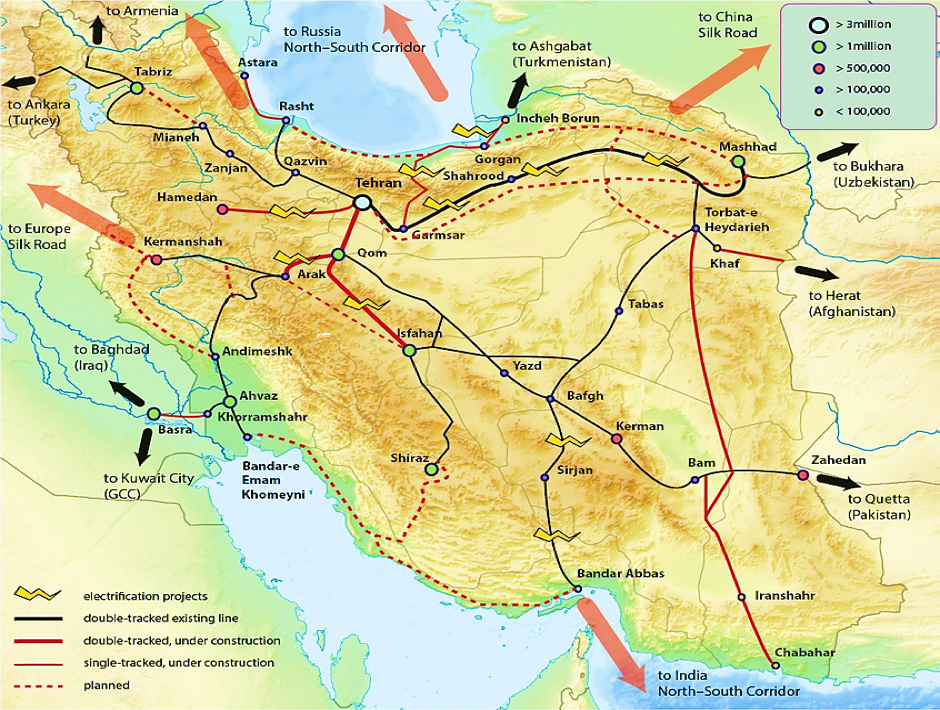
The 926-kilometer double-track Tehran–Mashhad corridor is the busiest railway line in Iran. The line will be electrified, which will increase the speed of trains from 160 km/h to 200 km/h. It will reduce the travel time by almost half and increase the capacity of the line. Electrification of the line will increase traffic on the route from 17 to 40 trains per day in each direction, which permits an increase of the ridership from 2.7 million to 33 million and freight from 1.5 to 10 million tons per year by 2032. The total cost of the project will be around $6bn. This project is partially financed through Chinese loans and still in progress now. In this regard when talking about Iran-China relations it is worthy to note that China’s strategic policy has focused on creating land corridors within the framework of the Belt and Road Initiative, and Iran adopted a policy of the development of these corridors through its own territory. Even now, commercial shipments are entering Iran from China by rail, and the customs and the “Sahlan” rail zone are ready to expand their loading capacity and transit services along this route. The Iran–China corridor has a potential to become a permanent route for traders-a route that according to Iranian experts can attract even Western countries that can make use of it.[28] There are also chances that after Iran’s positions are strengthened within the SCO, China’s commitment to invest in the Tehran–Mashhad line will become more serious.
Iran has an ambitious plan to construct one of the largest high-speed rail networks in the Middle East. Iran has 1,336 km of high-speed rail under construction, 177 km planned and 165 km long-term planning with an operational speed of 250 km/h. Construction of 410 km Tehran-Isfahan high-speed rail, with operational speed up to 300 km/h was being carried out by the China Railway Engineering Corporation (CRECP). Also, it involved Germany’s Siemens, Italian group Ferrovie dello Stato and Khatam Al-Anbia Construction, owned by Iran’s Revolutionary Guard. The cost of the project was estimated to be $41.8bn and completion was set for 2021 but remains uncompleted yet in 2025. Approximately $3 billion in total investment, half public and half private, is earmarked to complete the project, which is currently 75% complete in the critical Qom-Isfahan segment.[29] Once operational, the Tehran-Isfahan high-speed rail is projected to carry 8 million passengers in its first year, with a long-term target of 20 million annually. This modal shift will underpin a more resilient, efficient, and sustainable transport system, relieving pressure on road infrastructure and aviation. With this project Iran has a broader ambition to integrate into the global transit network, capture a larger share of the lucrative international freight market, and diversify its economy beyond oil revenues. From the Iranian perspective this rail corridor can knit together two critical international transit arteries - the North-South Corridor, linking Russia to the Persian Gulf and onward to India, and the East-West Corridor, or the modern Silk Road, connecting China to Europe via Central Asia and Turkey. Qom-Arak high-speed rail line 135 km long and Tehran-Hamadan line 320 km was planned to build by the Italian state railway group (Ferrovie dello Stato (FS)) as part of a €5bn credit promised by Italy but then after the withdrawal of an Italian firm due to US sanctions on Iran, Iran decided to delegate the project to the Chinese. The projects remain incomplete up to 2025. All these projects are progressing slowly, remain incomplete or their fate remains unknown due to difficult economic conditions and the impact of sanctions, and to build Iranian high-speed rail it will need to have a large financial input and use a large amount of natural resources.
The major railway passenger transportation company is the Raja Rail Transportation Company, which was established in 1996. The company is responsible for the operation and maintenance of passenger carriages. It transports approximately 60% of the total number of passengers in Iran. To satisfy a continuous increase in demand for travel, the company introduced double-decker trains. In terms of transporting passengers, Iranian railways mainly provide long-distance connections. Safety remains a critical concern for the rail sector of Iran. The Iranian rail network has historically suffered from high accidents that are mainly due to human error and sand and dust storms. One of the deadliest accidents happened in 2004 near Neyshabur with 328 deaths and 460 injured. One of the reasons for an elevated accident rate can be severe staff fatigue of railway staff. For example, the average length of a shift for train drivers is 8 hours but the maximum can be 24 hours.[30]
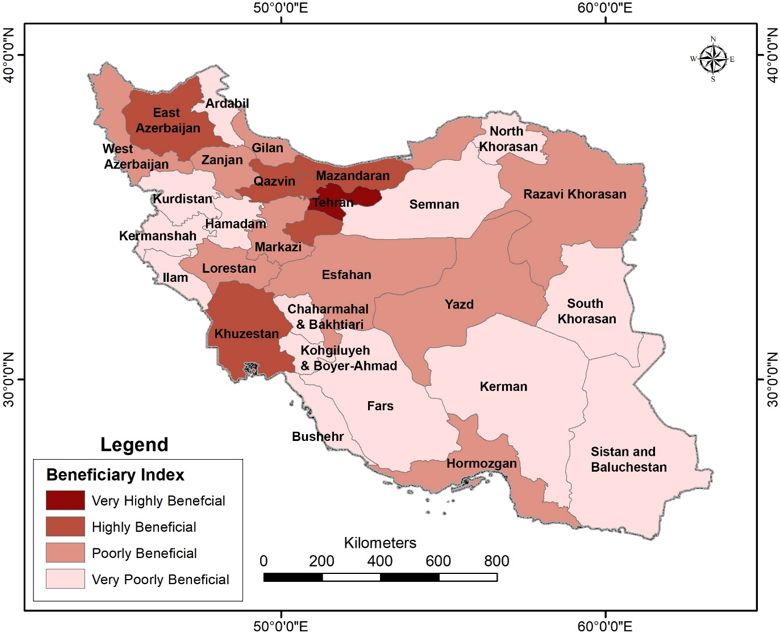
Iran’s economic development has been influenced by the evolution of its railway network. In the northern territories, marked by the Caspian Sea coast, fertile expanses, and the Alborz Mountain range, notable developmental strides in agriculture and tourism sectors have been recorded. Industrial augmentation, driven by the railway infrastructure, has been noted in the western and southwestern terrains, which are characteristically mountainous and abundant in hydrocarbon reserves. Despite their historical limited economic dynamism attributed to arid landscapes, the railway network has ignited growth in distinctive nodes within the central regions. The eastern and southeastern peripheries, sharing borders with Afghanistan and Pakistan, have been ascertained as strategically crucial for transit and commerce, bolstering their developmental trajectory. Only one province, specifically Tehran, benefits substantially from the railway transport system. This province hosts approximately 25 (9.40%) railway stations and 399 km (7.92%) of railway tracks. The regions in Iran benefitting most significantly from the railway are East Azerbaijan and Khuzestan. Regions deriving minimal or extremely limited benefits include West Azerbaijan, Zanjan, Gilan, Markazi, Lorestan, Isfahan, Yazd, Razavi Khorasan and Hormozgan. Regions with extremely limited benefits, namely Ardabil, Bushehr, Chahar Mahall and Bakhtiari, Ilam, Kohgiluyeh and Boyer-Ahmad, Kordestan, South Khorasan, North Khorasan, Sistan and Baluchestan, Kermanshah, Kerman, Fars, Hamadan, and Semnan.
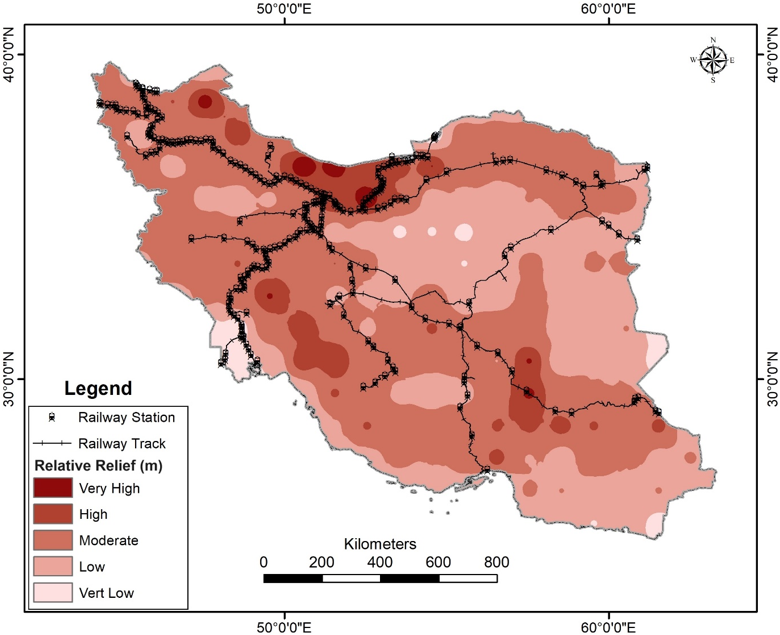
Iran’s varied topography introduces substantial challenges to railway development. Specifically, mountain ranges like the Zagros and Alborz present formidable barriers. The complexities of these terrains, from steep ascents to challenging geological conditions, mandate advanced engineering solutions. These solutions, including the deployment of tunnels, bridges, and reinforced track beds, are critical for maintaining rail connectivity. Additionally, expansive deserts such as the Dasht-e Kavir and Dasht-e Lut pose operational impediments due to elements like shifting sands, extreme climatic conditions, and potential track deformations. Hence, regions like the northern Caspian plains and the southwestern Khuzestan plain, with their more forgiving terrains, have been more conducive to railway expansion. However, topographically challenging areas suffer from limited connectivity, which might inadvertently create regional development disparities.
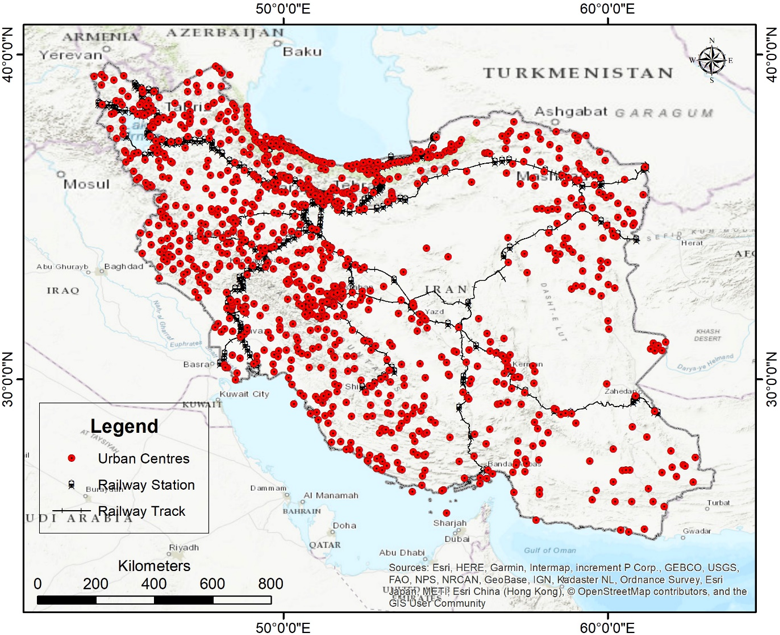
Economic centers in Iran inherently influence its railway infrastructure. In Iran, this dynamic becomes evident in the railway networks concentrated around principal urban locales. Such layouts cater to the high population densities and thriving economies of these regions. Tehran, the capital and economic nucleus of Iran, stands as a testament to this phenomenon. Given its dense population and commercial density, industries, and institutions, a sprawling railway system has been established. This intricate system, extending in various directions, facilitates the daily movement of commuters, goods, and services, underscoring Tehran’s pivotal role in the nation’s economic matrix. Beyond Tehran, notable industrial and commercial hubs such as Isfahan, Tabriz, and Mashhad exhibit a similar reliance on an expansive railway infrastructure. Given the economic significance of these cities coupled with their dense populations, creates an imperative for robust transport networks to fuel their continued growth. Thus, railway infrastructure not only adapts to existing urban and economic spatial patterns, but also actively shape future trajectories of urban growth and economic activity.
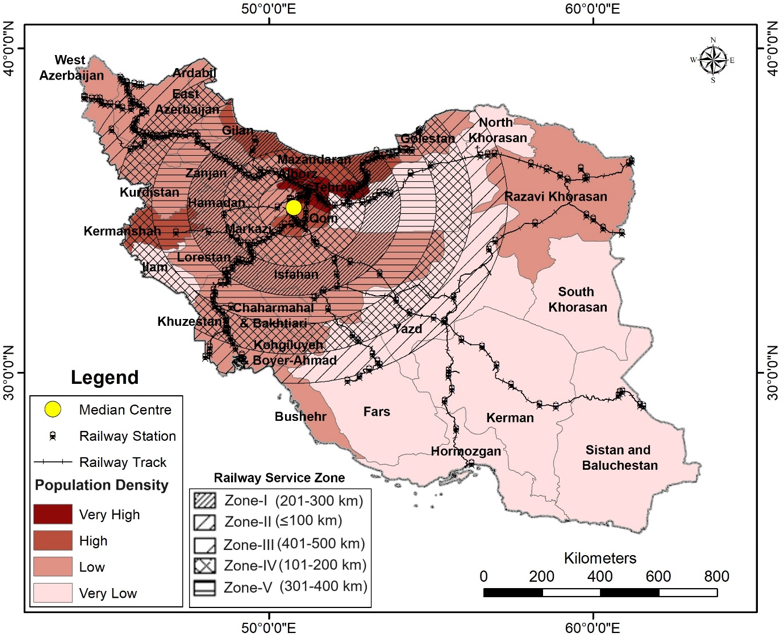
The rapid expansion and urbanization of historically prominent commercial hubs have driven a concurrent demand for efficient transport infrastructure. This urban growth, in turn, actively propels the expansion of the railway network. A notable positive correlation between the emergence of urban centers and the proliferation of the railway system can be discerned, attesting to the railways’ efficiency over other modes of transport. There is a complementary relationship between historical urban prominence and the contemporary railway network densities.[31]
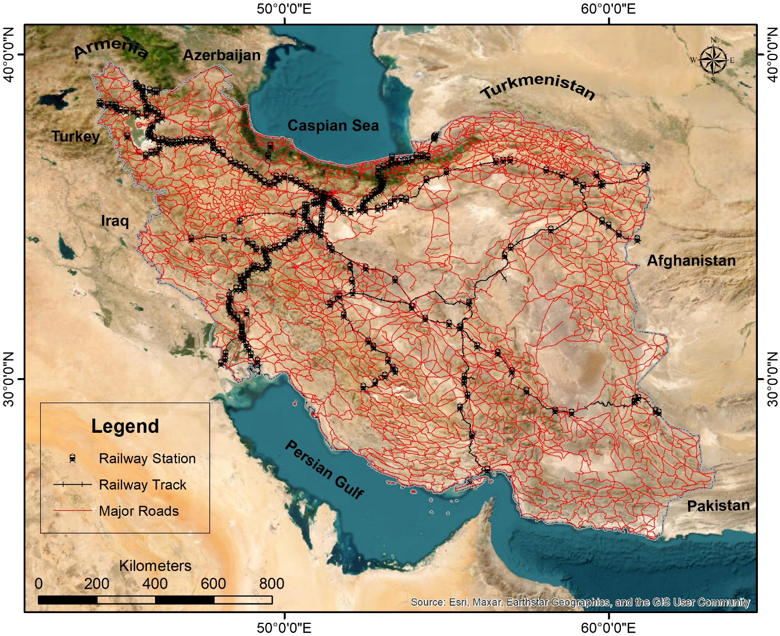
The complementary role of road networks alongside railway systems within Iran becomes evident. While the expansive rail networks across Iranian provinces play a pivotal role in commercial logistics, the road network supplements this framework, ensuring that goods, services, and people reach their final destinations, especially in regions where topographical challenges preclude rail infrastructure development. Although railways often serve as the bedrock for large-scale transport, road networks act as vital feeder connections, aiding in the movement on a feeder transport.
One of the significant developments in Iran’s bus transportation system has been the introduction of modern and environmentally-friendly buses into the public transport market. Beginning in the late 2000s and early 2010s, the deployment of electric, Compressed Natural Gas (CNG)-powered, and hybrid (gasoline–electric) buses expanded. These changes were made especially to reduce air pollution and improve the quality of public services.
In Tehran, bus routes have expanded significantly in recent years. Currently operating over 250 bus routes and transporting millions of passengers daily, Tehran has one of the largest public transportation systems in the Middle East. These lines, along with other public transport modes such as the metro and taxis, play a major role in reducing traffic congestion and air pollution as part of the urban transport network. However, other major cities in Iran have also sought to improve their bus systems, especially in recent decades. In cities such as Mashhad, Isfahan, Shiraz, and Tabriz, bus routes have expanded and have even been equipped with intelligent systems and smart traffic management technologies.
Although Iran’s bus network has made progress in recent years, there are still challenges in this sector. Some of the major issues include:
♦ Fleet senescence: many buses are old and worn out and need to be replaced.
♦ Capital constraints: developing new routes and purchasing new buses requires substantial investment.
♦ Persistent environmental impact: despite the use of gas-powered and electric buses, a large portion of the fleet still relies on fossil fuels, which contribute to air pollution.[32]
Today, despite all the challenges, buses remain a primary and highly economical mode of public transport in Iran. These vehicles not only play a direct role in moving people, but also have great importance in reducing traffic congestion.
Rail routes in Iran are not limited to domestic cities, and trains can be used for travel or for transporting cargo. The main reason that makes rail routes advantageous compared to alternative transport modes is their lower transportation cost. Moreover, in recent years, many rail connections have been established between Iran and neighboring countries, and even more distant destinations, substantially facilitating international passenger and freight transit. Iran has direct rail border crossing to the following countries: Azerbaijan, Latvia, Lithuania, Moldova, Mongolia, Poland, Russia, Albania, Georgia, Kazakhstan, China, South Korea, Kyrgyzstan, Belarus, Bulgaria, Vietnam, Tajikistan, Turkmenistan, Uzbekistan, Ukraine, Estonia.[33] Iran has rail connections to several neighboring countries, through which cargo and passenger transport to other countries in Anatolia, Central and East Asia, and Eastern Europe is carried out. Iran’s land rail borders are:
Border with Turkmenistan
◊ Sarakhs
◊ Incheh Borun
Serving as Iran's most active rail gateway, the Sarakhs border crossing exchanges up to 300 railcars of cargo daily with Turkmenistan and plays a key role in connecting Iran to the Central Asian countries.
About 85 percent of the transit passing through the Sarakhs border consists of shipments entering Iran from Central Asia, which are directed through the national rail network toward Bandar Abbas, the Razi border, and then Turkey and the European route. The Sarakhs railway border is not only Iran’s gateway to Central Asia, but it can also become a key link in the global transit network. Developing this border and increasing the daily exchange of railcars will pave the way for enhancing Iran’s share in the international transit market. Iranian railways have bogie-changing stations on the border with Turkmenistan-Sarakhs station. A critical technical dimension of this crossing is interoperability management: to bridge the track gauge discrepancy between Central Asian networks—which utilize Russian broad gauge (1,520mm)—and Iran’s standard gauge (1,435mm), the Islamic Republic of Iran Railways operates specialized bogie-exchange installations at the Sarakhs terminal to facilitate seamless transshipment.
Incheh-Borun, which has the capacity to transport 7 million tons of freight and 5 million passengers annually, is located at the junction where the eastern Caspian Sea connects to Iran, and serves as a crucial intersection for both the International North–South Transport Corridor (INSTC) and East–West transit routes. In 2014, a milestone trilateral railway agreement was signed between Iran, Turkmenistan, and Kazakhstan, under which Turkmenistan committed to constructing 700 km, Kazakhstan 1,400 km, and Iran 80 km of track․ These discussions are still ongoing. The closest land route from China to Iran passes through Incheh-Borun free zone - a route yielding a transit time of merely 12 to 13 days. This border can become an export gateway to CIS countries, Russia, and China. One of the projects of the Russian and Iranian governments was to electrify 495 km of the Garmsar-Incheh Borun line near the border with Turkmenistan, with the estimated cost of $1.3bn but the Russian investor subsequently withdrew, primarily due to the tightening of U.S. sanctions against Iran and now its fate is uncertain.
Border with Azerbaijan
◊ Astara
◊ Jolfa
Russia is involved in construction and modernization of Iranian railways. One of the joint projects is the construction of a new 164 km railway line Rasht-Astara between the Republic of Azerbaijan and Iran. The main feature of the project is to build a railway with a dual gauge 1520 mm and 1435 mm. This line is the western branch of the International North-South Transport Corridor (INSTC) that connects Russia, Iran and India (the 7,200 km long corridor includes different transportation modes, such as shipping, rail and road). The signing of €1.6-billion loan agreement between Iran and Russia is in the stage of negotiation. Official Moscow announced the credit line financing had not been frozen. It is expected that the project will be completed within 3-4 years. The targeted transit capacity for the Rasht–Astara railway, based on the project’s final potential, is estimated at 15 million tons of cargo transit between Iran, Azerbaijan and Russia. However, the line is currently being planned with a design capacity of seven million tons per year, and there are concerns that even this capacity may not be fully utilized.
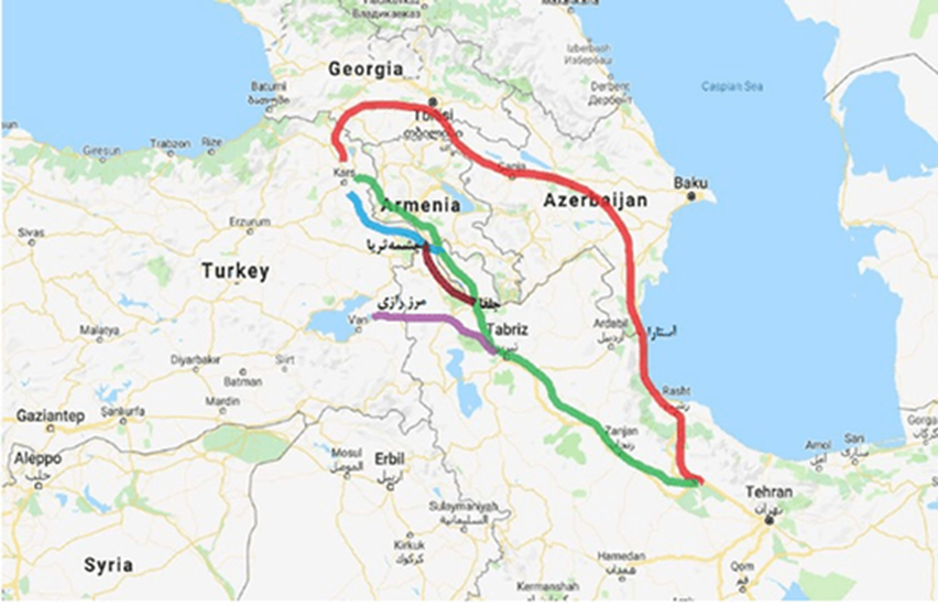
In Julfa, Nakhichevan, the railway route is divided into three parts: south to Jolfa across the Iranian border, west and north to Yerevan, and east along Armenia’s southern border towards Azerbaijan. Iranian railways have bogie-changing stations on the border with Azerbaijan at Jolfa border station. Azerbaijan railway has 1520 mm gauge. Unlike the Rasht–Astara route, the Jolfa route on the same western branch of North-South corridor requires only 62 kilometers of rail installation. Currently, the railway in Nakhchivan extends to the eastern part of the region, namely the city of Ordubad; therefore, closing this gap requires constructing a 360-meter bridge from Ordubad, and after 62 kilometers of rail installation, connecting to the city of Aghband in the Republic of Azerbaijan.
Border with Pakistan
◊ Mirjaveh
The Iran–Pakistan rail connection, beyond being a mere infrastructure project, has a geo-economic potential to reinforce the North–South Corridor, deepen regional connectivity, economic integration and turn Iran into the center of gravity for Eurasia–South Asia transit. The corridor capacities of the two countries make it possible to connect Chinese goods to European markets through Iran and Pakistan. Iran’s railway line up to Zahedan has been built with standard gauge, and from Zahedan to Mirjaveh — a distance of 94 kilometers — Pakistan’s railway network extends into Iranian territory. Thus Iranian railways have bogie-changing stations on the border with Pakistan, as Pakistan has 1676 mm gauge. One of the bogie-changing stations is the Zahedan station, which has been in operation since 2007. The deterioration of the Zahedan–Quetta corridor in recent years has become the main bottleneck in transportation between the two countries: bilateral infrastructure agreements have been signed to rehabilitate the route. Two countries are working on projects to increase the volume of freight transported by railway reaching an annual capacity of one million tons and also increase the number of tourists and pilgrims from Pakistan to Iran and Iraq travelling by railway. There is a strong will from Iran and Pakistan to restore the Islamabad-Tehran-Istanbul railway network.
Border with Turkey
◊ Razi
Major rail axes connecting Iran to Turkey include:
– Istanbul Railway Route: This railway line starts from the Doğubayazıt station and passes through the city of Erzurum before reaching Istanbul.
– Van Railway Route: Van is one of Turkey’s important cities located near the Iranian border.
– Ankara Railway Route: The train first enters the city of Van and then continues toward Ankara.
People can send their cargo and postal parcels by train to any of these three cities. In addition, tourists can travel to Turkey by train in order to reduce their travel expenses.
The East–West corridor, one of the most important transit axes, has the potential to strengthen Iran’s role in the logistical connection between China and Europe. However, the western segment of this corridor—namely Iran’s exit route to Europe—has long faced a fundamental challenge and has yet to take on a stable and competitive form. The rail corridor through Turkey remains the sole active surface route that connects Iran to Europe, but this route suffers from a critical bottleneck: Lake Van. At this point, the railway is interrupted, and wagons must be transferred using special ferries. This process creates a major logistical bottleneck, increasing transit time, elevating operational costs, and limiting throughput capacity. The current capacity of this route is roughly 700,000 tons per year, which is far below Iran’s transit needs. Additionally, the rail infrastructure in southern Turkey is outdated, slow, and lacks the necessary conditions to compete with alternative regional routes. Turkey has proposed an alternative route that connects Iran to Kars—and from there to Europe—from the north via the Marand–Cheshmeh Soraya railway. With the implementation of this route during its initial operational phase, the volume of freight exchanges between Iran and Turkey is estimated at 10 million tons per year.
Border with Iraq
Regarding rail border crossings with Iraq, two principal routes are under development/consideration:
◊ Shalamcheh
◊ Khosravi
The Shalamcheh–Basra and the Kermanshah–Khosravi railways represent strategic arteries capable of linking Iran to Iraq and activating the broader East–West transport corridor. In the Shalamcheh–Basra railway project, the main challenges have been political and technical. However, for the Kermanshah–Khosravi line—at least on the Iranian side up to the Khosravi border—there have been no significant technical or political obstacles. Iran has completed demining along the first 16 kilometers of the Shalamcheh–Basra route and has advanced the construction of the Arvand (Shatt al-Arab) bascule bridge to 30 percent completion. The Iraqi government has divided the project of this railway into three sections, the first of which—demining operations—has so far achieved 70 percent progress. The Shalamcheh–Basra railway offers significant benefits for both countries, including substantially facilitating cross-border religious tourism and pilgrimage traffic toward Karbala through reduced travel cost and time, improved passenger safety, and facilitated trade through lower transportation costs. Although the Shalamcheh–Basra project has attracted more attention from officials due to its shorter route and lower cost, the Kermanshah–Khosravi railway has greater strategic importance because it geographically brings the two capitals—Tehran and Baghdad—closer together. Despite its greater geographic length and terrain complexity, the Kermanshah–Khosravi line holds superior strategic value by directly linking the capitals of Tehran and Baghdad. The rail connection from Kermanshah to Khosravi consists of three sections: a 263-kilometer segment from Kermanshah to Khosravi within Iran; a 27-kilometer segment from Khosravi to Khanaqin inside Iraq; and a 182-kilometer segment from Khanaqin to Baghdad, which requires rehabilitation. The total length of the route is about 472 kilometers, and construction on the Iranian section from Kermanshah to Khosravi has already begun.
Beyond bilateral transit with Iraq, Tehran advocates for a broader strategic vision: a trilateral rail corridor linking Iran, Iraq, and Syria. This initiative aims to establish a continuous overland rail link bridging the Persian Gulf directly with the Mediterranean Sea.
Border with Afghanistan
◊ Khaf
Iran is developing a railway that will connect the Iranian city of Khaf in Eastern Iran to the Afghan city of Herat. Historically, Afghan authorities exhibited reluctance toward railway development due to political considerations and geopolitical anxieties over external dependency. The first commercial shipment was loaded in Iran and entered Afghan territory by train on December 2, 2020, as a trial operation. The cross-border line was officially inaugurated on December 10, 2020, by the presidents of both nations via video conference. While the Khaf–Herat railway is nearing full operationalization, critical border congestion persists at the adjacent Dogharun–Islam Qala road crossing. Currently, heavy dependence on overland trucking creates severe bottlenecks, where processing up to 2,000 trucks daily requires shifting to 24-hour border operations. In this context, the new rail corridor serves as a vital intermodal alternative, designed to absorb heavy freight volumes, reduce reliance on road transport, and eliminate chronic delays for commercial fleets.
Iran’s Rail–Sea Border Points
Southern Coast (Persian Gulf)
◊ Bandar Imam Khomeini
◊ Bandar Abbas
◊ Bandar Khorramshahr (waterway connection to Iraq)
◊ Bandar Bushehr
◊ Chabahar Port
Northern Coast (Caspian Sea)
◊ Bandar-e Torkaman
◊ Amirabad Port
◊ Bandar Anzali
Iran’s transport system demonstrates strong strategic vision. Since the era of Reza Shah, the railway system—long regarded as a source of pride for the Iranian people—has remained state-owned, centrally managed, and heavily Tehran-centric. It exhibits a number of vulnerabilities even for domestic users: degraded infrastructure, harsh topography, and extreme climatic conditions constitute persistent structural challenges. Freight rail transport suffers from long delays, reducing overall competitiveness. All these factors diminish safety and comfort. Iran has ambitious plans for the modernization of its railway network, but sanctions and economic constraints have significantly slowed progress. A certain degree of momentum emerged after the signing of the nuclear agreement, when Iran—seeking to capitalize on the opportunities it created— engaged in contractual cooperation with several Western companies to implement these projects. These companies later withdrew and cancelled previous commitments. As a result of sanctions and adverse economic conditions, Iran has attempted to find partners in China and Russia, but the tangible outcomes of these efforts have yet to materialize, even after several years.
Railway infrastructure in Iran does not generate endogenous economic growth in isolation; rather, it acts as a catalyst in regions with pre-existing economic potential. This explains why the findings presented in the study indicate economic development benefits in Tehran and in regions such as East Azerbaijan and Khuzestan, rather than in other areas. As the capital, Tehran benefits disproportionately from railway investment, reflecting its overall economic dominance. A similar pattern is observed in East Azerbaijan and Khuzestan: the former holds significant transit importance, while the latter plays a central role in the oil industry. These regions have simply been able to extract greater benefits from the presence of railway infrastructure. Based on these examples, it can be concluded that improving railway effectiveness depends largely on constructing or developing rail lines in areas that already possess economic potential. By connecting economically viable regions, railways are able to generate greater overall returns. This inverse relationship—namely, the influence of economic centres on the construction and development of railways—has been taken into account to some extent in the cases of Tehran and major industrial and commercial hubs such as Isfahan, Tabriz, and Mashhad, where railway development has been aligned with economic importance and rising urbanization. There is also a positive relationship between the emergence of urban centers and the expansion of the railway system, which is particularly important for enhancing social interaction, connectivity, and communication among populations. Iran’s topography, in turn, exerts a strong influence on the development of the railway network. Overcoming these geographical challenges will require technologically innovative solutions and substantial financial investment, the full provision of which remains difficult for Iran under current conditions. It should also be noted that railways form the backbone of long-distance and heavy transport, while road networks continue to fill gaps where rail transport is impractical. Buses remain the most affordable and widely used mode of public transportation in Iran.
Iran occupies a unique transit position at a geographic crossroads linking Europe, Russia, the South Caucasus, Central Asia, South Asia, and China, while also enjoying access to both the Caspian Sea and the Persian Gulf. For a state situated at such a pivotal geopolitical intersection, an integrated rail network is a cornerstone of strategic autonomy and economic projection. Iran’s railway system is based on standard-gauge national coverage and includes multiple border crossings as well as maritime-rail intermodal hubs along the Caspian Sea and the Persian Gulf. In order to capitalize on this geographical potential, Iran requires a well-developed transport policy and advanced transport infrastructure. However, persistent international sanctions, capital deficits, and institutional investment bottlenecks severely constrain infrastructure expansion.
Several major international rail corridors pass through Iran, including:
The International North–South Transport Corridor (INSTC) represents Iran’s most viable corridor and carries very high strategic, geopolitical, and economic value. It connects Europe and Russia to the Persian Gulf and India. Its main gateways include Astara, Jolfa, Bandar Abbas, and the port of Chabahar. This corridor possesses enormous geo-economic potential which, if fully implemented and optimized on the ground, could generate substantial benefits for Iran and the wider region. At this stage, however, the corridor’s effective operation is hindered by unfinished railway segments and repeated delays in project implementation. In particular, construction of the Rasht–Astara railway section remains incomplete. For an extended period, Moscow repeatedly deferred its financing commitments, driven in part by strategic reorientations following the Russia–Ukraine war and a desire to maintain diplomatic leverage. More recently, however, Iran has intensified its diplomatic efforts in this direction, driven by changing economic conditions and a desire to achieve tangible results. Currently, freight transport between Iran and Azerbaijan is conducted via the Astara transshipment terminal, where chronic operational bottlenecks and infrastructural deficits lead to severe freight delays. Amid changing regional dynamics involving Iran and Azerbaijan, Iran has increasingly operationalized the Trans-Caspian maritime route via the Port of Amirabad, using short-sea shipping to Russian ports (such as Astrakhan) as a critical intermodal alternative.
The development and operation of the TRIPP road in Armenia will open new opportunities for an alternative North–South axis, contribute to route diversification, and secure Iran’s access.
Within the evolving geo-economic environment surrounding Iran, the importance of this transport route via Jolfa has increased significantly. Notably, the route to Europe via Armenia is more time-efficient than the route through Azerbaijan. At the same time, rail transit to Europe via Turkey has recently encountered several constraining factors, consequently, empirical evidence indicates that only a fraction of the corridor’s substantial transit capacity is currently utilized. One possible limiting factor for Jolfa route is the difference in track gauge; however, this challenge is solvable and manageable. Iranian railways operate automated and manual bogie-exchange facilities at the Jolfa border station. Additional technological solutions include variable-gauge wheel sets, dual-gauge tracks and transshipment terminals. Iran already has practical experience with bogie-changing stations: Iranian Railways operate such facility at Sarakhs, on the border with Turkmenistan, where up to 300 freight wagons are exchanged daily. Dual-gauge tracks are also planned for the Rasht–Astara section. While these solutions may lead to time delays and higher costs during operation, they represent a necessary compromise that maintains railway connectivity; without them, cross-border rail transport would not be possible at all.
Along the Europe–India and Russia–India routes, the role of Chabahar Port, located in Iran’s Sistan and Baluchestan Province, has recently increased significantly. Chabahar Port comprises 34 maritime infrastructures and two commercial ports: Shahid Kalantari and Shahid Beheshti. Shahid Kalantari is the older port, serving traditional and smaller vessels, and provides connectivity with the Persian Gulf, the United Arab Emirates, India, and Pakistan. Under Phase II of the Shahid Beheshti port expansion, 1,000 square meters of immediate quayside area and 40 hectares of off-dock land have been designated for bulk cargo operations. Other countries have also been allocated land, and Afghanistan and Tajikistan have submitted formal requests for land acquisition. A milestone 10-year main contract was executed with India’s IPGL (India Ports Global Limited), securing an initial capital investment of approximately USD 120 million for heavy port machinery and crane infrastructure.
India has been allocated around 70 hectares out of a total 350 hectares. Direct maritime connectivity from India’s Nhava Sheva (JNPT) and Kandla ports enables a rapid two-day transit time to Chabahar. Regular freight transport is also conducted between Chabahar and several ports in Qatar. Iran exports fruits, vegetables, petrochemical products, and electrical equipment through the port, while importing rice and bananas. Discussions are underway regarding the potential use of larger vessels to transport passengers and cargo from Chabahar to additional destinations, including Oman. For a certain period, Chabahar Port was included on the list of U.S. sanctions, but as recently been exempted from sanctions.
Currently special working group formed for the 625-kilometer Chabahar-Zahedan railway operation. Official Tehran has planed the Chabahar-Zahedan railway become operational in the shortest possible time. Beyond its economic significance, the North–South Corridor also holds substantial potential for enhancing human mobility, social interaction, and cultural exchange.
East–West Corridor represents another major macro-artery of significance. It connects Europe to Central Asia and China. The main gateways are Sarakhs, Incheh Borun, Razi, Mirjaveh, and Khaf. The Sarakhs terminal is already successfully operational, whereas the Incheh Borun terminal, which has the potential to significantly reduce cargo transit times, holds substantial unexploited economic potential for accelerating regional cargo transit times. These terminals play a crucial role in trade with China and help maintain economic activity for Iran under the constraints of international sanctions.
As noted earlier, the potential of the Razi terminal is not fully realized due to the rail break at Lake Van and high transportation costs. For a long time, Turkey, taking advantage of the fact that this route currently represents the only railway link connecting Iran to Europe, has delayed the modernization and optimization of the railway for political reasons.
Mirjaveh and Khaf hold potential to provide alternative routes to Central Asia, India, and China. Mirjaveh is politically supported but technically fragile, while Khaf is technically complete but operationally limited and politically unstable.
The Mediterranean / Arab-Persian Gulf Axis envisions linking the Persian Gulf to the Mediterranean Sea and the Arab markets. The main gateways are Shalamcheh and Khosravi. This corridor has strategic depth as well as geopolitical and regional significance, and it has been discussed since the Qajar era. However, it has not yet been realized due to political turbulence, regional instability, and security considerations.
A historical flaw in Iran’s transport doctrine has been its passive reliance on geopolitical considerations, allowing external political realities to dictate route development rather than utilizing infrastructure to proactively reshape the regional landscape. However, contemporary Iranian transport planning increasingly reflects a paradigm shift. To maximize its strategic relevance, Iran is moving toward aligning geopolitical imperatives with economic efficiency-leveraging infrastructure as an instrument of intermodal connectivity, fostering complex cross-border interdependencies, and mitigating reliance on vulnerable maritime chokepoints.
REFERENCES
[1] Encyclopædia Iranica, s.v. "Railroads i. The First Railroad Built and Operated in Persia," published April 7, 2008.
[2] How was the route of the trans-Iranian railway determined, Political studies and research institute, 22.02.2021.
[3] Lemańczyk S., The Transiranian Railway – History, Context and Consequences, Middle Eastern Studies, vol. 49, N 2, pp. 237-245.
[4] Luft P., The Persian Railway Syndicate and British Railway Policy in Iran, In The Gulf in the early 20th century, 1986, pp. 158–90.
[5] The railway in Iran, Political studies and research institute, 22.02.2021.
[6] The railway in Iran, Political studies and research institute, 22.02.2021 .
[7] Rahahan-e Sarasari-ye Iran, p.54.
[8] The railway in Iran, Political studies and research institute, 22.02.2021.
[9] Hammerton J., The War Illustrated – Complete Record of the Conflict by Land, Sea and in the Air, Vol.V, Naples, FL: Trident Press International, 2000, p. 221.
[10] Hitti P.K., The Middle East History, New York: D. Van Nostrand Co., 1961, p. 417.
[11] Rahahan-e Sarasari-ye Iran, p. 86.
[12] Rahahan-e Sarasari-ye Iran, pp. 100–101.
[13] Rahahan-e Sarasari-ye Iran, p. 112.
[14] Hollingsworth B., Railways of the World, London: Bison Books Co., 1979, p. 253.
[15] Clawson P., Knitting Iran Together: The Land Transport Revolution, 1920–1940, Iranian Studies, Vol.26, No.3–4 (1993), p. 243.
[16] Bharier J., Economic Development of Iran 1900–1970, Oxford University Press, 1971, p. 204.
[17] Hammerton J., The War Illustrated – Complete Record of the Conflict by Land, Sea and in the Air, Vol.VIII, Naples, FL: Trident Press International, 2000, p. 392.
[18] Bharier J., Economic Development of Iran 1900–1970, Oxford University Press, 1971, p. 207.
[19] The railway in Iran, Political studies and research institute, 22.02.2021.
[20] Rahahan-e Sarasari-ye Iran, p. 133.
[21] Butler J.R.M., September 1939 – June 1941, in Grand Strategy, Vol. II, London: HMSO, 1956–76, p. 252.
[22] Bharier J., Economic Development of Iran 1900–1970, Oxford University Press, 1971, p. 203.
[23] The Story of Iran’s First Bus, Hamshahri, 4.10.2025.
[24] History of Bus Lines and Buses in Iran: From the Beginning to Today, Siona, 19.01.2025.
[25] Trans-Iranian Railway, UNESCO.
[26] Alireza Seyedvakili, S., Zakeri, J., Nasr Azadani, S. and Shafahi, Y., Long-Term Railway Network Planning Using a Multiperiod Network Design Model. Journal of Transportation Engineering, 2019. Part A: Systems, [online] 146(1), p.04019054 .
[27] Yaghini, M., Karimi, M. and Rahbar, M.. A set covering approach for multi-depot train driver scheduling. Journal of Combinatorial Optimization, 2013, [online] 29(3), pp.636-654.
[28] Electrification of the Tehran–Mashhad Railway Line with the Investment from Iran and China, Mehr, 03.09.2025.
[29] $3 billion Tehran-Qom-Isfahan rail redefines Iran’s transit role, Press TV, 19.10.2025.
[30] Watson I., Iranian National Railways, Permanent Way Institution journal, vol. 138, part 3.
[31] Roy S. and Ghorbanzadeh S., Regional transformation via rail: A historical and analytical examination of
Iran’s railway network and its socio-economic impacts, Mechatron. Intell Transp. Syst., 2023, vol. 2, no. 3, pp. 146–157.
[32] History of Bus Lines and Buses in Iran: From the Beginning to Today, Siona, 19.01.2025.
[33] Iran’s railway routes with other countries, Sepahran.